

The FTC's Robocall Action Plan

Under the Telemarketing Sales Rule, the vast majority of calls that deliver a prerecorded message trying to sell you something are illegal, unless you’ve given written permission for the caller to call you.  These “robocalls” are illegal even if your phone number is not registered on the National Do Not Call Registry

Most legitimate businesses adhere to the Telemarketing Sales Rule and do not place illegal robocalls.  Unfortunately, however, the prevalence of illegal robocalls has increased significantly in recent years due to technological advances that make it easier and cheaper to:

  • make large numbers of robocalls to consumers from anywhere in the world
  • fake Caller ID information in an attempt to mislead consumers and evade law enforcement

The FTC is working on multiple initiatives to combat the problem of illegal robocalls, including:

  1. Continuing Aggressive Law Enforcement
    The Federal Trade Commission continues to target high volume offenders and pursue “chokepoints” in the calling process to stop the largest number of illegal calls. The agency has stopped companies responsible for making billions of robocalls since September of 2009, and will continue to identify, locate, and prosecute those responsible for illegal robocalls.
  2. Gathering Evidence Strategically
    The FTC is focused on fighting robocalls with the most innovative and strategic law enforcement techniques available.  As one example, the agency has created a telephone “honeypot” that is currently receiving incoming robocalls.  This new tool will help the agency gather evidence about illegal robocalls directly and act on this information as quickly as possible.
  3. Coordinating with Law Enforcement, Industry, and Other Stakeholders
    On October 18, 2012, the agency hosted a public summit on robocalls. FTC staff continue to hold meetings and calls with engineers, technologists, industry experts, and others to discuss methods to better trace unlawful robocalls, combat caller ID spoofing, and stop illegal calls. 
  4. Pursuing Technological Solutions
    The FTC held its first public challenge, offering a $50,000 prize for an innovation to help curb illegal robocalls.  On April 2, 2013, the agency announced three winning solutions.  The Commission is now inviting all challenge contestants to make a version of their submissions public to further the national conversation about illegal robocalls.

Videos

Robocalls
Gone Wrong

Robocalls Gone Wrong

What to Do If You
Get a Robocall

What to Do If You Get a Robocall

FTC Robocall Challenge: Tips & Tricks

Tweets About Rachel

What's a Robocall & What To Do When You Get One

What's a Robocall?

If you pick up the phone and hear a recorded message instead of a live person, that's a robocall.

If the recording is a sales message (not a call from your healthcare provider or a charity), and you haven't given your written permission to get calls from the company on the other end, the call is illegal. Period.

What To Do When You Get an Illegal Robocall

In short:

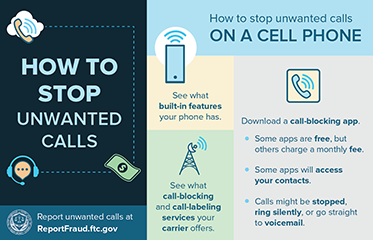
  1. Hang Up. Do not press 1 or any other numbers to get off the list.
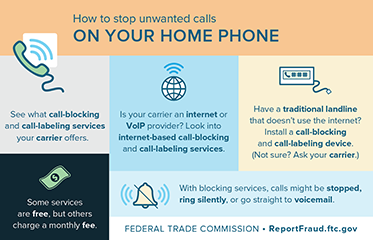
  2. Consider blocking the number.
  3. Report it at www.donotcall.gov.

For more info on what to do:


Spread the Word

Shareable Tips:

  • On Do Not Call list & getting robocalls you don’t want? Hang up. Pressing any number can lead to more calls. www.ftc.gov/robocalls
  • The FTC has stopped billions of illegal robocalls! Report robocalls online at www.donotcall.gov

Share on your site or blog:

Robocalls: ftc.gov/robocalls

Embed code:


Last Modified: Tuesday, April 2, 2013